

Flexing their acquisition of Game of Thrones creators David Benioff and D.B. Weiss, with Alexander Woo by their side, Netflix introduces 3 Body Problem, a sci-fi series based on the book of the same name. When a fateful decision is made in 1960s China, the reverberations are felt in the present, where a group of scientists team up with a detective to stop humanity’s greatest threat.

The opening of the series brought with it a certain level of intrigue, introducing a sequence of mysteries that would birth countless theories. By the climax of the pilot, I was no closer to any answers, but was all in. From that point onwards, 3 Body Problem becomes an incredibly ambitious adventure in more ways than one. It boasts surprises aplenty that will both thrill and alienate audiences. Firstly, this series is ambitious in its scope, scale and deep scientific roots. Being a perfect blend of science and science fiction, it incorporates themes and ideas that would be new to the majority of audiences. It explains them well, but it’s still loaded with high concept sci-fi elements, something that the casual TV viewer has been proven to not typically resonate with. This instantly puts the series at a disadvantage as many just won’t even give it a chance based on the complexity. However if you are a fan of intelligent sci-fi, this is the perfect watch. Each episode, for the most part, sees the scope of the narrative and complexity of the ideas grow. As the plot thickens and details come to light, the scale increases, the tension rises and the sense of danger intensifies… until it doesn’t.
This brings us to the second reason for this series’ immense ambition – the structure. Benioff, Weiss and Woo have taken a satisfying yet undeniably risky approach to the story that sees them undercutting plotlines and shattering expectations by deviating from the expected path. To put it simply, the implied direction and overall identity of the series at the beginning is nothing like what it is in the middle and is even further from what it is in the end. Every few episodes it’s evolving at a drastic rate, shifting the focus, scale and narrative approach. Personally, I loved the evolutions and growth, but I can see where one or two decisions may not be taken in a unanimously positive light. Pulling the rug from under the feet of the audience is incredible when you’re pivoting towards a more chaotic large-scale narrative, but risky when replacing intense global mayhem with character-focused drama. The late narrative shift – making the story hyper-focused on the core characters – brings about some deeply emotional beats, but it’s at the expense of a growing scale and scope. So while I adore the creative choice, it does have its setbacks which impact the final few episodes.
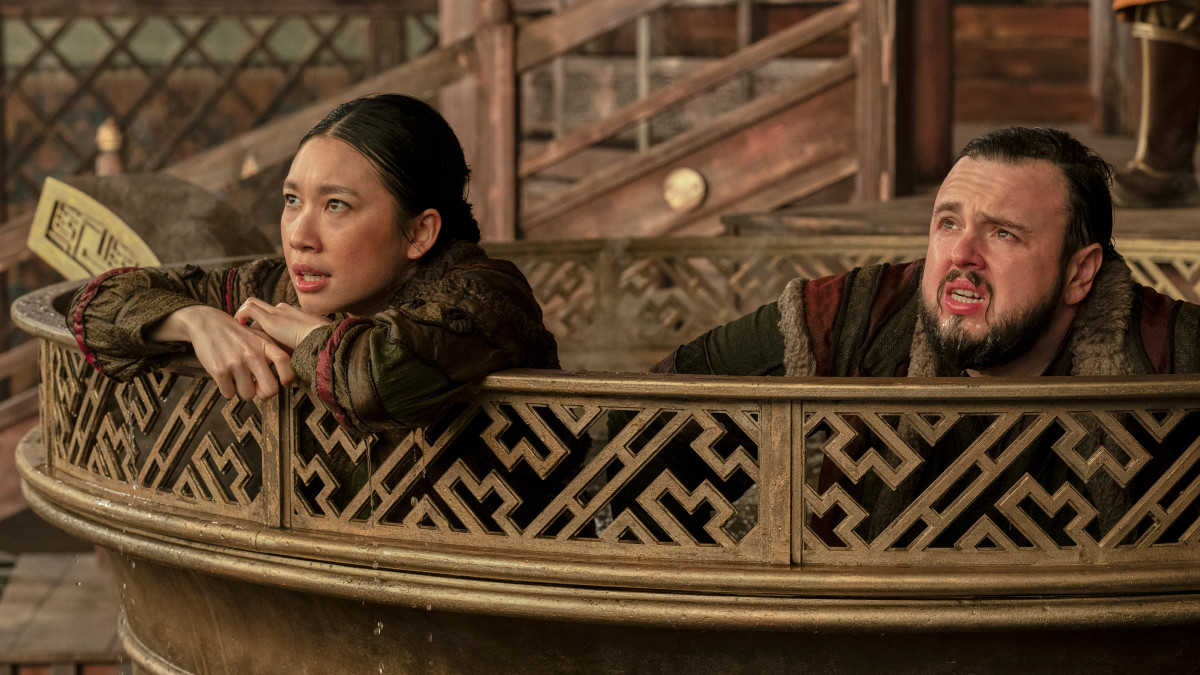
All that being said, the narrative at play here is one packed with tension, thrills and a deep mystery that gradually and satisfyingly unfolds. This is the type of mystery that’s so good that I wish it played out on a weekly schedule – time spent theorising and trying to piece things together only adds to the experience. The bingeing model means the mystery unpacks itself at a rapid rate, but in this case it’s not any less rewarding. The series drops little morsels of information and sprinkles answers throughout to give you the chance to piece things together. It makes for a fun and rewarding viewing experience, and potentially even an exciting rewatch. The first five episodes are an exceptional example of how to maintain constant tension, enhance thrills and keep audiences locked in. The tone rides this fine line of being dark, serious and brooding, while still easing the tension with pockets of witty character comedy. It’s a thrill ride that gets better and more brilliant with each episode – a huge testament to the writing. Despite the heavy scientific content and constant science talk, it doesn’t leave the casual audiences in the dust. So long as you’re paying attention, the core ideas and necessary concepts are well explained and fleshed out enough to follow along.
As much as the narrative has its twists and turns, the pace through the first five episodes is consistent. It never drags for too long and is always moving towards its end goal with a sense of purpose. Even if there’s a subplot or character that feels inconsequential, they play more of a role than you may think. I keep mentioning the first five episodes isolated from the last three due to the entirely different identity they share. The sense of tension is still there in the home stretch, but it’s much different – the pace is very subdued, the narrative is stripped back and it focuses intently on the lead characters. The slower pace is undoubtedly a jarring shift, one that won’t work for some people who were expecting something more following the episode five climax. It’s a fair criticism that even I share to an extent, but by bringing it back to the characters it ensures all of their arcs are fleshed out and complete come the finale. From the get-go, this series has been about a race against time, hence the countdown marketing, and you really do feel that throughout. Despite the shifts in focus and tone, there’s always that sense that the characters, and by extension you, are on the clock. It creates an edge-of-seat vibe with a ticking time bomb of tension that’s well integrated in the identity of the series.
In assembling the cast, Benioff, Weiss and Woo have brought together a mix of relative newcomers, young talent and seasoned vets for a very well rounded affair. Liam Cunningham (Thomas Wade) and Benedict Wong (Da Shi) bring a very classy vibe to their respective scenes with strong performances. There’s something about the way they carry themselves while bringing their respective characters to life that’s so captivating. When either of them are in the room, it’s typically all eyes on them. Of the younger cast, all of Jess Hong (Jin), Jovan Adepo (Saul), Eiza González (Auggie), John Bradley (Jack) and Alex Sharp (Will) have moments where they impress. They’re not very demanding roles, I feel like much of that could come from future seasons, but they all make their respective characters interesting and engaging to follow. It’s hard to say who is the lead of those five as it kicks off with Auggie but then Jin takes the lead, but they share the screentime and each have an arc that makes them important to the core story.

In the end, 3 Body Problem is a series that came literally out of nowhere and blew me away with its blend of science and science fiction. It’s gripping, tense and entertaining, weaving in wild twists, otherworldly concepts and mysteries that will keep you guessing. While it’s not as polished as it could be, the show’s identity constantly shifts to keep you on your toes at all times. While there is room for improvement with how it structures its season, it leaves off in a place that should have fans excited for what’s to come. That is if it gets renewed for a second season – it’s an expensive intelligent sci-fi series on Netflix, so it’s not a sure bet.
8.7/10

 Everything Movie Reviews
Good Job! 🙂
@landonhopkins2000
LikeLike