

The latest video game adaptation to hit the small screen is Fallout, an Amazon Prime Video creation based on the long-running post-apocalyptic RPG. The series follows three individuals as they forge their way through a lawless war-torn landscape, encountering each other and other unforeseen obstacles.
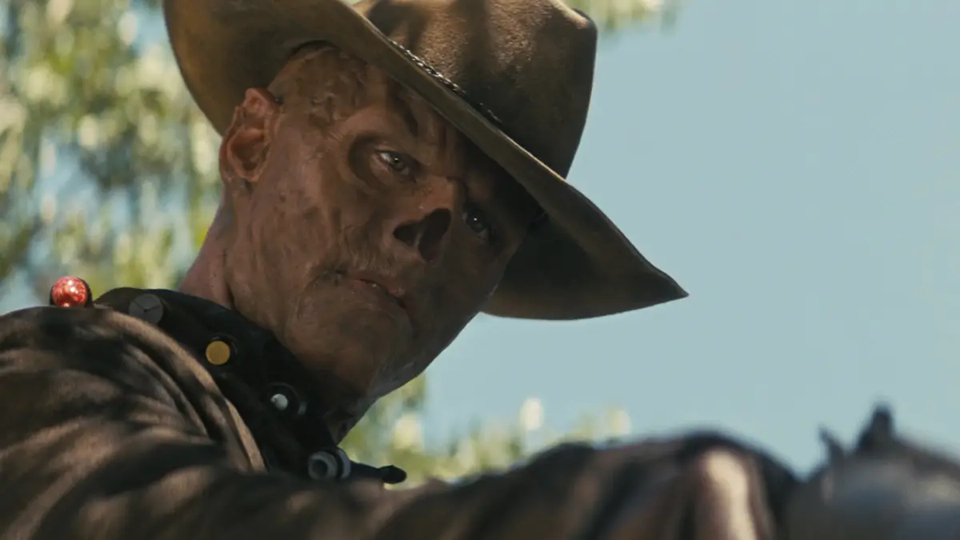
First thing’s first, a little rant. It doesn’t matter what you prefer, Fallout should have undoubtedly been a weekly release. It’s clear from the pacing of the mystery, the scope of the story and the way Jonathan Nolan, Lisa Joy and other creatives have built this world that the intention was to pace out the season. To compare, let’s look at a show like Westworld – a Nolan and Joy creation. It benefited from its weekly release as it made room for theories to develop between episodes, promoted conversation amongst the audience and allowed the core mystery to take the viewer on a journey that only grew with tension every week. Additionally, it allowed big mid-season moments to breathe and helped the audience appreciate and remember those key scenes. A huge revelation or cliffhanger became memorable because it was a mystery for one, two or even five weeks. In an all-at-once dump like Fallout, a big moment at the end of episode three, for example, will be forgotten because any tension will be stripped away two hours later and replaced with an even bigger moment. It’s not a bad way to do things, but it absolutely throttles this show’s potential.
As much as I loved Fallout, it’s held back by the decision to drop every episode at once. The weight of its developing mysteries doesn’t hit as hard as it could have because any questions we had were answered moments later. Imagine having to wait a week without some of these huge answers – it builds anticipation and excitement, ultimately making the revelations more rewarding. This is a huge, highly detailed and fleshed out world that deserved to have every episode stand on its own as a spectacle, but it’s been stripped away in a very odd release decision. Additionally, each episode is packed with enough content to ensure a weekly release plan would be rewarding for audiences. In contrast to Westworld, let’s look at Stranger Things. That series fits the binge release model perfectly because of how the narrative flows from episode to episode. The episode endings are made to feel less like stopping points and more like checkpoints in a larger story. Any hook isn’t there for you to ponder over the next week, it’s clearly designed to have you roll right into the next episode. As such, I don’t think Stranger Things would be as good with a weekly release, just like Fallout with a binge model. All that being said, don’t let this deter you from watching – it should still be seen – it’s just disappointing how one poor (probably studio-influenced) decision has led to missed potential.
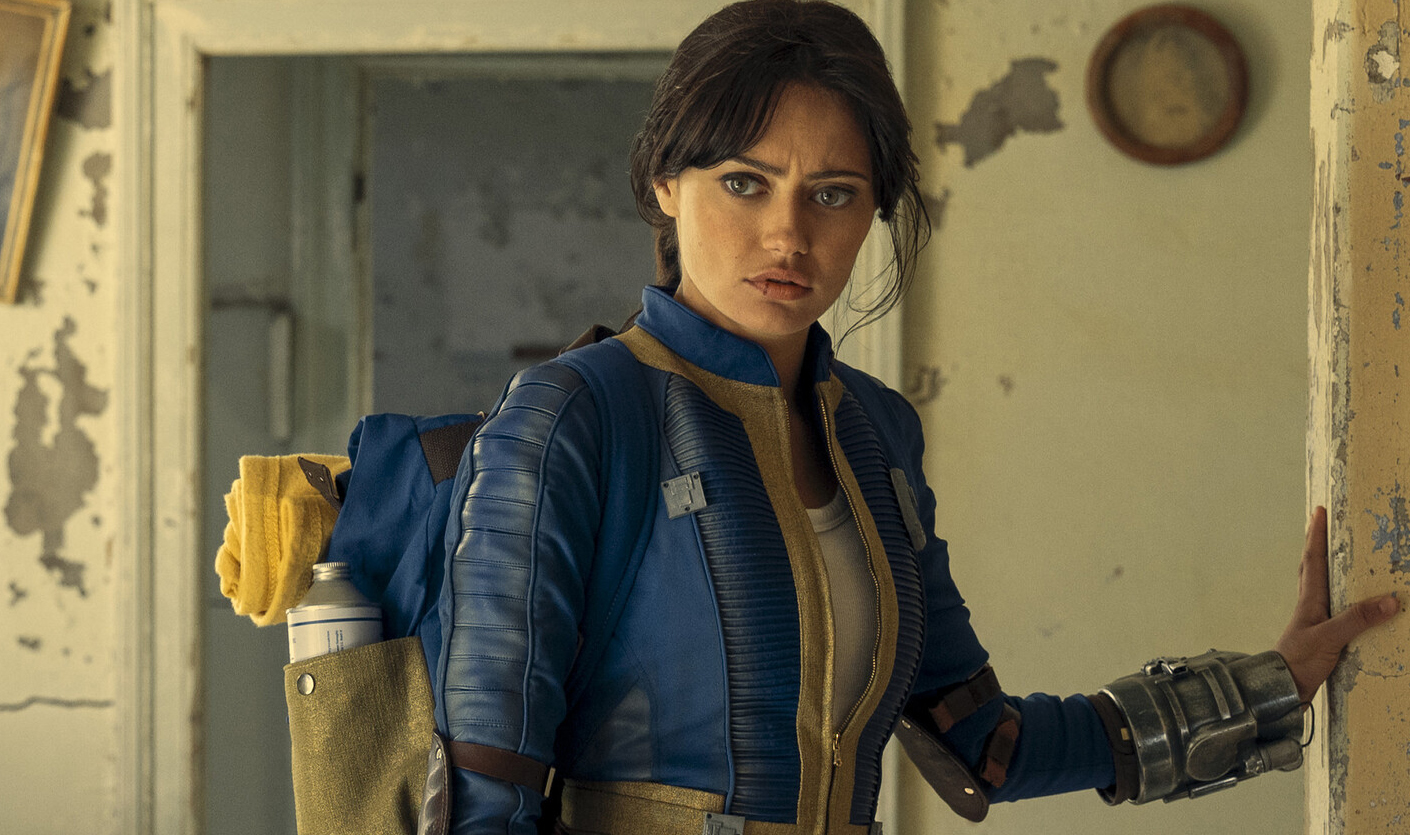
On to the show at hand – Fallout excels in bringing its video game counterpart to life in a way that’s fun, weird and engaging for audiences both new and familiar to the world. The use of three distinct protagonists, each with a unique personal journey, is a great way to break up the series and offer multiple lenses to experience this landscape through. The good thing is, every one of the three central journeys has some big draw that makes you excited to switch back to them. For Lucy (Ella Purnell), it’s how she experiences the world as a fish out of water, for Maximus (Aaron Moten) it’s how he learns what it really is to be a soldier, and for The Ghoul (Walton Goggins) it’s great to see a gun-toting bounty hunter wreak havoc. As the arcs interlink and branch off throughout the season, it makes following each character matter to the grander story instead of just feeling like bunch of random, nonsensical side quests. The respective narratives aren’t entirely void of any dips in quality – there’s some scenes early in the season where it can feel a bit like we’re just chasing down a MacGuffin, and in those moments it’s less fun. Ironically, the series pokes fun at side quests at around the same time, but it’s not enough for me to forgive it entirely. The good thing is, the great heavily outweighs the bad, so these dips in pace where characters get sidetracked don’t leave a stain on the quality.
For a post-apocalyptic series, the narrative has plenty of surprises in store as its core mysteries develop from episode to episode. There’s many secrets lurking under the surface of this world, and that aspect of the series is what kept me coming back the most. Moises Ares plays Norm, a vault dweller, who embarks on a journey of his own to solve some lingering mysteries. His story arc is quite possibly the most engaging of the season, a huge shift from what I thought would be my least favourite part. He’s on a path shrouded in mystery and it’s wonderfully tense. The questions that loom over the series create this constant sense of unease and allure that sucks you in and keeps you hooked. The suspense is gripping and crescendos in a neat finale that doesn’t do anything spectacular, but satisfyingly concludes every arc that the season has progressed.

One element that I feel will drive the success of this series is the tone. The world of Fallout is a wacky place, with crazy personalities roaming the Earth, and the writers have done their best to reflect that. As a result, the tone is very lighthearted and comedic – there’s a humour-driven edge weaved into most scenes whether they be simple character moments or larger action sequences. It ensures that whenever there’s blood flowing or a deep conversation, it remains fun. You’re always one step away from a good gag, which makes the journey all the more entertaining. While you do have entire sequences that are thrown in for the laughs, like a lot of the vault content, it does know when to dial it back and let the emotion take hold. Character growth is a big part of the season, and although there could have been a little more development there, what we do get is satisfying. Those character changes don’t come with some hard-hitting discussions, and Fallout makes sure to sprinkle those beats evenly throughout the series.
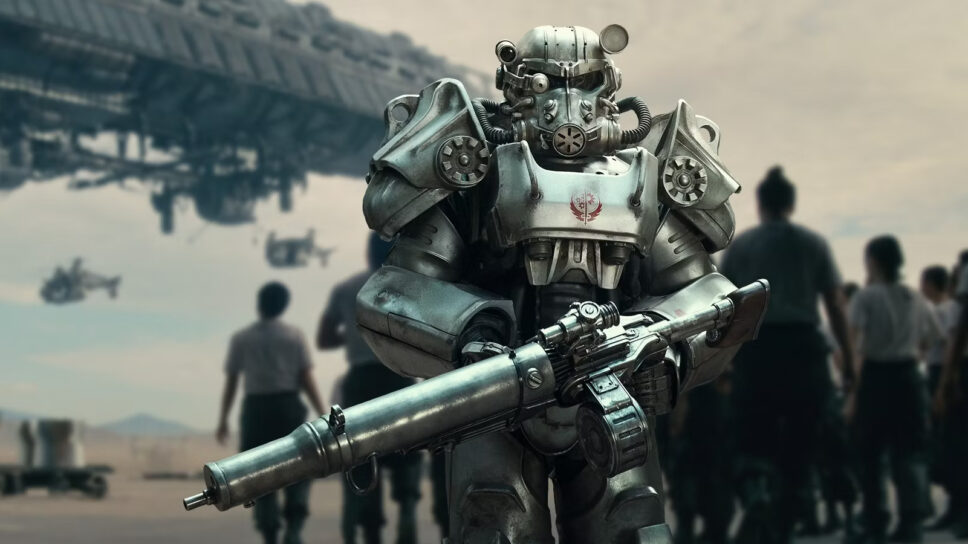
Part of what makes this series feel so grand is scope yet so tangible is the clear reliance of shooting on location with practical sets. Is there CGI? Of course, but so many of the key locations look and feel real because they are. The set designers and location scouters made good use of the series’ big budget, bringing the world to life in a way that impressively beautiful. There’s something about having actors on set and in a location they can interact with that looks so much better than having them in a warehouse in front of a green screen. For instance, Disney’s use of The Volume on shows like The Mandalorian is very seamless and impressive, but it still lacks that real-world feel. Shooting on location even helps in selling the authenticity of the action sequences, which are all very fun. The Power Armour is one thing you can see so many studios opting to build entirely in CGI, but the fact that it’s a practical suit in here makes it so much more intimidating.
Performance-wise, there’s charisma aplenty to go around, especially with our leads. Walton Goggins is a fantastic character actor, and he knocks it out of the park once again. The Ghoul is the most fun personality of the series and Goggins brings all facets of the character to life. Whether he’s cracking one-liners or blasting people through the head, he’s an absolute blast. Then there’s Ella Purnell, someone who I wasn’t previously aware of, but is now firmly on my radar. The way she portrays the clueless innocence of Lucy leads to some of the most heartwarming and hilarious moments. The “cousin stuff” line in the pilot for instance is one of the funniest bits that caught me entirely off guard. Even better than Purnell and Goggins on their own is when they interact with each other. When these polar opposites clash and the actors just bounce off each other, it creates the best character interactions of the series. Aaron Moten and Moises Ares round out the leads with two great performances. Their characters are less ‘loud’ personality-wise, and thus the performances don’t ask as much of them, but they’re still captivating whenever they’re on screen.
In the end, Fallout is a triumphant debut season and fun-filled introduction to a world sprawling with chaos and secrets around every corner. It’s a large-scale story that’s easy to follow, with three distinct leads who all up the entertainment factor. The elements of comedy are balanced by the suspense that lines most episodes, courtesy of a collection of mysteries that unfold throughout. Speaking of suspense, the fantastic score by Ramin Djawadi proves once again that he’s one of the best in the business, and probably the best when it comes to TV. Whether you’re a fan of the games or you’re coming in fresh, Fallout has proven to be a burst of fun for all, definitely worth the journey.
8/10

 Everything Movie Reviews
I’ve been wanting to watch this since it came out! Thanks for the review, I will keep that in mind when pondering viewing this series.
LikeLiked by 1 person