
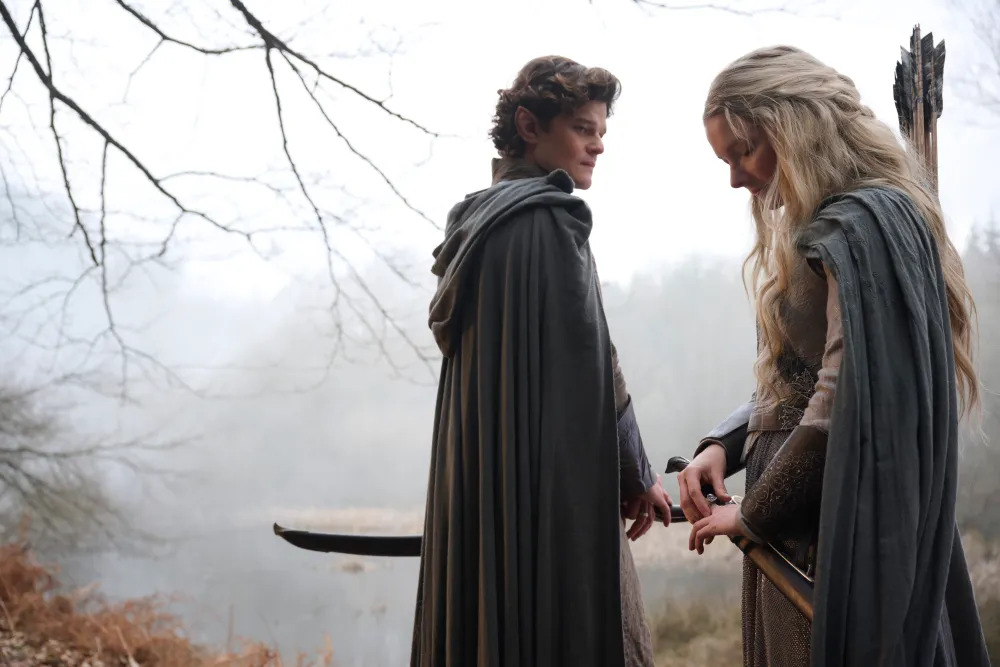
While the first season left little room for improvement, season two seems to have managed to do just that. The Rings of Power takes big leaps in its second season, focusing heavily on its titular rings while exploring more of Tolkien’s world and shedding light on the Second Age.

As a major fan of the first season and how well it represented huge, monumental events in the history of Middle Earth, there’s no question it prioritised spectacle over writing and dialogue. While the writing team could have stuck with that approach, they’ve listened to criticism and delivered a season that flips the script, showcasing rich character development and entire arcs dedicated to deep, compelling dialogue. This season set itself a task – with so many characters already introduced and spread throughout Middle Earth, it was bound to have to jump around to ensure everyone gets their share of screen time. While it doesn’t break up that screen time evenly, it does so perfectly based on which arcs are most engaging and important to the future of the show. The vast majority of time is spent in Eregion and focused on the forging of the Rings at the hands of Celebrimbor and Sauron. I’ll tread lightly with spoilers, but anyone who knows an inkling of the narrative knows what goes down. This arc is the best thing the series has accomplished to date – every second spent in Eregion is dare I say perfect.
Each and every Eregion scene is drenched in a combination of tension, intrigue, drama and terror as we witness the machinations of Sauron taking shape. Through the bulk of the season, Eregion’s scenes aren’t loaded with action, nor are they fast paced, they’re focused on highlighting the tragedy unfolding through riveting dialogue and dire foreshadowing. If the entire season, nay, the entire series, had been set within the walls of Celebrimbor’s forge and Sauron’s prison, I’d be elated. While the dialogue is phenomenal and edge-of-seat tension is plentiful, these sequences are made whole by a duo of world-class performances from Charlie Vickers (Sauron) and Charles Edwards (Celebrimbor). Imagine being cast as Sauron and not be allowed to showcase your ability to be evil for a whole season. That’s the issue Vickers faced in season one, but now he’s able to showcase the despicable manipulation of Sauron in all its glory. Vickers is deeply captivating across every scene as he brings Sauron to life in a way that hasn’t been done before. He’s alluring, likeable, evil and unforgivable all at once, and somehow Vickers showcases all of those sides of this complex character with ease. His back and forth with Edwards is a delight to watch, as Edwards has some truly exceptional scenes himself. As Celebrimbor is broken down throughout the season, Edwards taps into some dark places to bring out the dread, despair and emotion of what he’s going through. It’s the best arc coupled with the best performances that makes Eregion the place to be in this season.

While that’s all brewing, over in Khazad-dûm there’s an equally as gripping narrative unfolding that gives each of our dwarven characters some huge moments to shine. With the influence of the Rings playing their role, there’s plenty of unrest and tension growing all through the mountain, specifically with Prince Durin IV and the strained relationship with his father, King Durin III. Every time we cut back to the mines the narrative is ripe with drama, full of emotion and led by a trio of intriguing characters that also includes Disa. She’s a character who has really grown on me since the first season, and it’s all due to the newfound strength of the writing and dialogue – making her much more of a fleshed out personality. The dynamic between the prince and his father is riveting throughout the season and it culminates in one of the best climaxes of the season, paying off two seasons of growth. The impact of these moments is enhanced via the stellar performances of both Owain Arthur (Prince Durin IV) and Peter Mullan (King Durin III). They share some truly heartbreaking and heartwarming moments that are only as impactful as they are thanks to the chemistry they share. It’s a father-son relationship that resonates with so many, showing how much the writers really honed in and focused on the smaller character beats this season.
Now, my one gripe with the sprawling narrative of this season is that a few of the arcs aren’t directly connected to the forging of the Rings, and thus not as compelling right now. I understand why we need them – they involve characters that will be important down the line – but as for the main draw of the season being the Rings, I can’t help but feel like they’re tacked on. That’s not to say they’re bad arcs – there’s a lot to love about everything happening across Númenor and Rhûn (and occasionally with Isildur) – but they’re noticeably isolated from the core events. There’s one episode where Eregion and Khazad-dûm don’t make an appearance, and that’s a definitive low-point for the season despite the other arcs picking up the slack quite well. There’s even a couple of moments where it’s clear a scene or two was cut from those arcs to give more time to the story of the Rings – a good decision, but it is noticeable in those arcs where it feels like a beat was skipped. All in all, I feel like future seasons are going to benefit greatly from the time this season spends with Elendil, Pharazôn and the Harfoots, so I’m not criticising those arcs too harshly. Because as I said, they all have some damn awesome moments, they’re just not as in-demand as arcs elsewhere in Middle Earth.
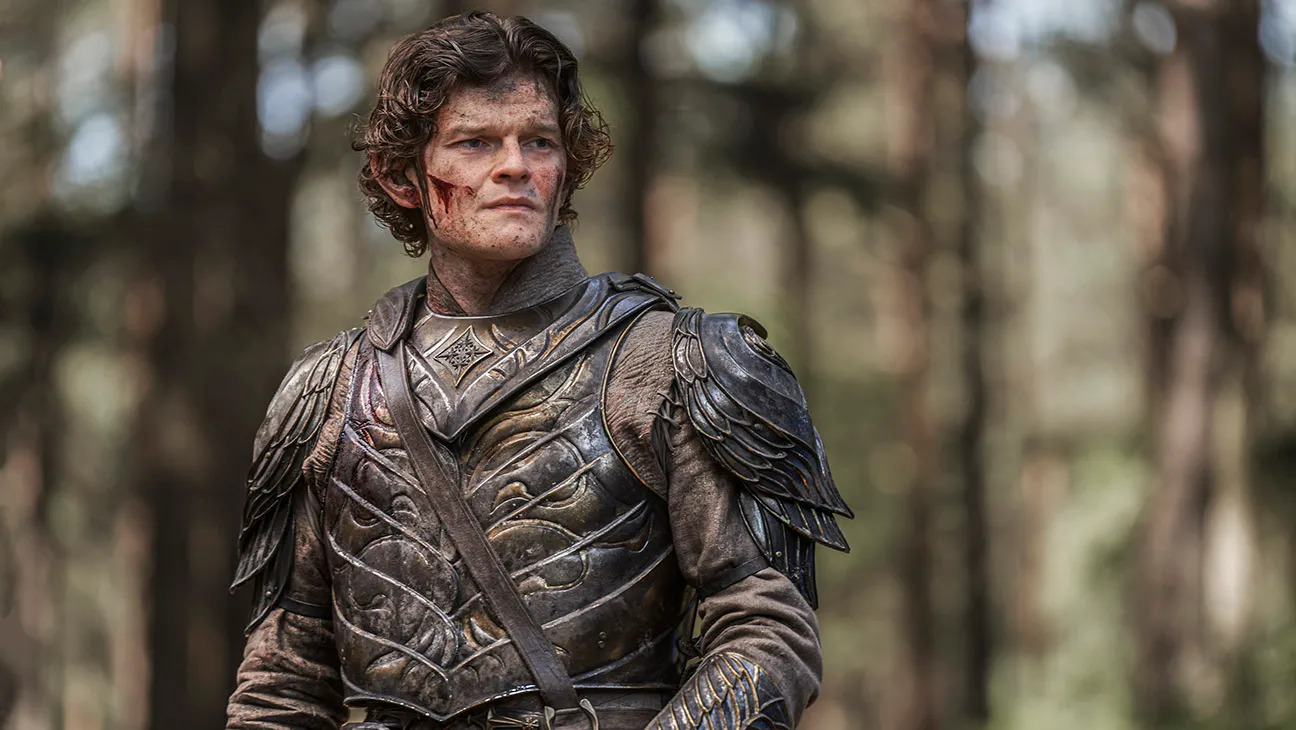
Much like the first season, no expense is spared when it comes to bringing the scope and scale of the LotR films to the small screen. From sweeping establishing shots to sequences of traversing vast landscapes or dense forests, the wonder and awe of Middle Earth shines through in every moment. To achieve a sense of epic scale is much harder on TV as oppose to on film, but this series has done so exceptionally well thanks to the buckets of cash it’s spending and the work of its artists. It’s not just the grand shots that are stunning, as every small-scale set is crafted with exquisite detail and really transports you to that corner of Middle Earth. The blend of physical and CGI environments is so seamless it’s often hard to discern where the line is, and that’s one of the biggest compliments I can give. Moving the filming location from New Zealand to the UK was a bold decision considering how synonymous that landscape is with the franchise. But honestly the change isn’t noticeable, at least not in any detrimental way. Sure, there’s one environment that couldn’t possibly be in NZ, but it makes sense that it would be a part of Middle Earth, so there’s no love lost.
Large action set-pieces have always has been a mainstay of the franchise, and that’s no exception here. This season features fewer larger set-pieces but isn’t void of its tense action-focused moments. These scenes are peppered throughout the season to liven up the episodes that are largely dialogue driven, while not taking away from those quieter moments. While the first six episodes may be the calm before the storm, the final two episodes are jam-packed with balls-to-the-wall action that delivers a large-scale battle close to the likes in the original trilogy. It’s tense, exciting and relentless, with all the hallmarks of a classic LotR battle – the perfect culmination to a season that has been a pressure cooker of suspense. Considering there’s still more battles to come that are promised to be even bigger, this is a great sign of the epic content that lies on the horizon.
Lastly, I should highlight some of the other arcs and performances that make this season a delight. Adar returns in this season, this time portrayed by Sam Hazeldine, and talk about an exceptional addition to Tolkien’s lore. This character is one of the best of the series – he has a complex and mysterious history, intriguing goals and a demeanour that makes him both menacing and sympathetic. He’s a wonderfully layered character and every scene we get of him is brilliant. Hazeldine does a great job of taking over the role and actually elevates the role beyond just a one-note villain. Morfydd Clark (Galadriel) and Robert Aramayo (Elrond) once again bring their characters to life with top notch performances that almost single handedly carry some of their respective scenes. The moments in which the two of them interact are full of tension and thoroughly enjoyable, making me wish we had more of them.

In the end, The Rings of Power season two takes huge steps forward, both in narrative and tone, to find a balance between spectacle and character-focused moments. The greater focus on the smaller beats is felt right from the first episode, and it pays off in making the epic sequences even more impactful. The highlight of the season is the focus on Sauron’s manipulation an heinous machinations, and the effect they have on Middle Earth. Anyone who couldn’t get into the first season should stick with it in order to appreciate the brilliant return to Middle Earth that this season accomplishes. This season is packed with drama, tension and delves deep into the extent of Sauron’s evil for the first time in LotR’s on-screen history, sure to be a hit for any rational LotR fan.
9.7/10

 Everything Movie Reviews
1 Comment