

Let’s sum up this sequel in one quote courtesy of Harvey Dent; “You either die a hero or live long enough to see yourself become the villain”. Joker: Folie à Deux (unfortunately) continues Arthur Fleck’s story as he meets the love of his life, Lee Quinzel, in the midst of his criminal trial, battling his dual identity along the way.
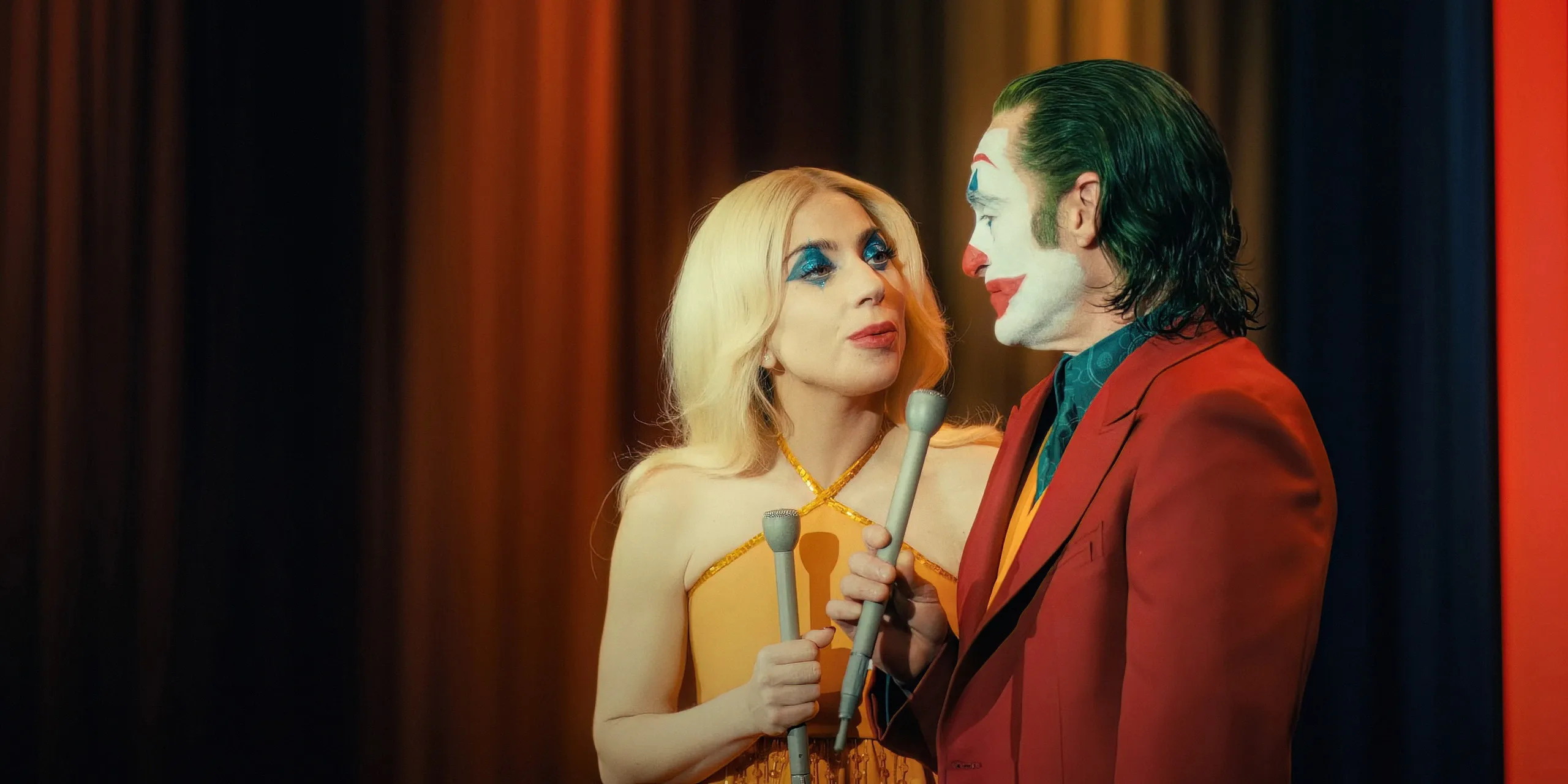
2019’s Joker was one spot off my top film of that year – a mesmerising character study that’s dark, gritty and beautifully poignant. It’s the type of film that didn’t call for a sequel, but given the absolute bank it made, it’s no surprise WB and Todd Phillips birthed this followup. In what is an embarrassing fall from grace, Folie à Deux tries and fails to flip the script with a tonal shift that doesn’t work and a narrative that’s stagnant, adding nothing of value to Arthur Fleck’s growth. I give Todd Phillips credit for deciding to try something completely out of left field – turning this film into a musical. It’s an idea that piqued my interest and could have been great if the musical moments meant anything and were backed by a good story. But neither of those is true. As a result, I have to criticise the producers over at WB who should’ve had the guts to say no.
To put it simply, this movie is like a fever dream – musical numbers both subtle and surreal break up the pace of the dramatic story while adding nothing of value. It’s clear they’re used to give us insight into Fleck’s psyche as the situation around him changes, but Joaquin Phoenix’s performance does that perfectly anyway. Much like in the first film, Phoenix’s performance is flawless – he evokes every feeling and emotion Arthur is experiencing in a way that’s easily discernible. There’s no need for jarring musical numbers that come across as silly in a film that presents itself as a psychological thriller. Todd Phillips shot for the stars and ended up in another galaxy with a terrible misfire.
Despite the musical numbers not hitting their mark, they don’t make up too much of the runtime. So assuming the narrative is a gripping affair much like in its 2019 predecessor, this should still be a thrilling time… right? Hidden beneath the veil of a musical is a courtroom drama that goes virtually nowhere. Don’t get me wrong, there’s some exceptional spine-chilling moments and individual scenes that are effective in showing the best and worst of Arthur Fleck. But they’re sprinkled through a slow-moving narrative that doesn’t teach us anything more about who Fleck is that we didn’t already know. From start to finish, there’s not a lot that happens to substantiate the deep character study it set itself up to be. The events play more as like an epilogue to the first film, sending us through a rigmarole of ups and downs that get us nowhere. It’s also somewhat boring – quite a few times I found myself checking the time to see how much longer I’d have to endure… never a good sign.

The romance between Joker and Lee Quinzel is one element of the story that showed a tonne of promise. It’s one aspect that seemed to be working while it’s being initially teased and set up. But so much of their dynamic is limited to the musical numbers that it never reaches its full potential. Again, they have great individual moments but are robbed of a fully fleshed out arc. The best arc/subplot is that which involves Fleck and the love/hate dynamic he has with the Arkham guards, namely Brendan Gleeson’s Jackie Sullivan. The tension is ripe through every one of the scenes they share – I found myself glued to their dynamic and always keen to see how their scenes would play out. This arc makes way for some hilarious and some truly harrowing moments – a delight in contrast to the tonally empty musical scenes.
The out-of-left-field approach to this being a musical had me pondering the following question during these moments – Did Todd Phillips always have the idea of this being a musical, and thus cast Lady Gaga as Quinzel, or did he cast Gaga as the perfect Quinzel and then rework the script into a musical to make the most of her talents? My brain obviously thinks option A, because that’s what would make sense, but with how this turned out I wouldn’t be surprised if it was B.
As I’ve touched on, the performances from both Phoenix and Gaga are something to marvel at. Phoenix dives head first back into the role and embodies his unique version of the Joker perfectly. While I don’t think he’ll be able to back up his Oscar win for Joker, there’s no question his performance elevates the film and stops it from dropping into “bad” territory. His mannerisms, the way he moves through each scene an his dialogue delivery is gripping, making it hard to take your eyes off him. When he full embraces the Joker persona, featuring that harrowing laugh, he’s quite chilling to watch. Meanwhile, Gaga does exceptional stuff with so little runtime. Her presence as this world’s Harley Quinn makes for one of the film’s best characters. Quinn has a unique role I didn’t expect to see, and Gaga sells it brilliantly. The scenes they share and are able to play off each other are wonderful, I only wish there were more of them.
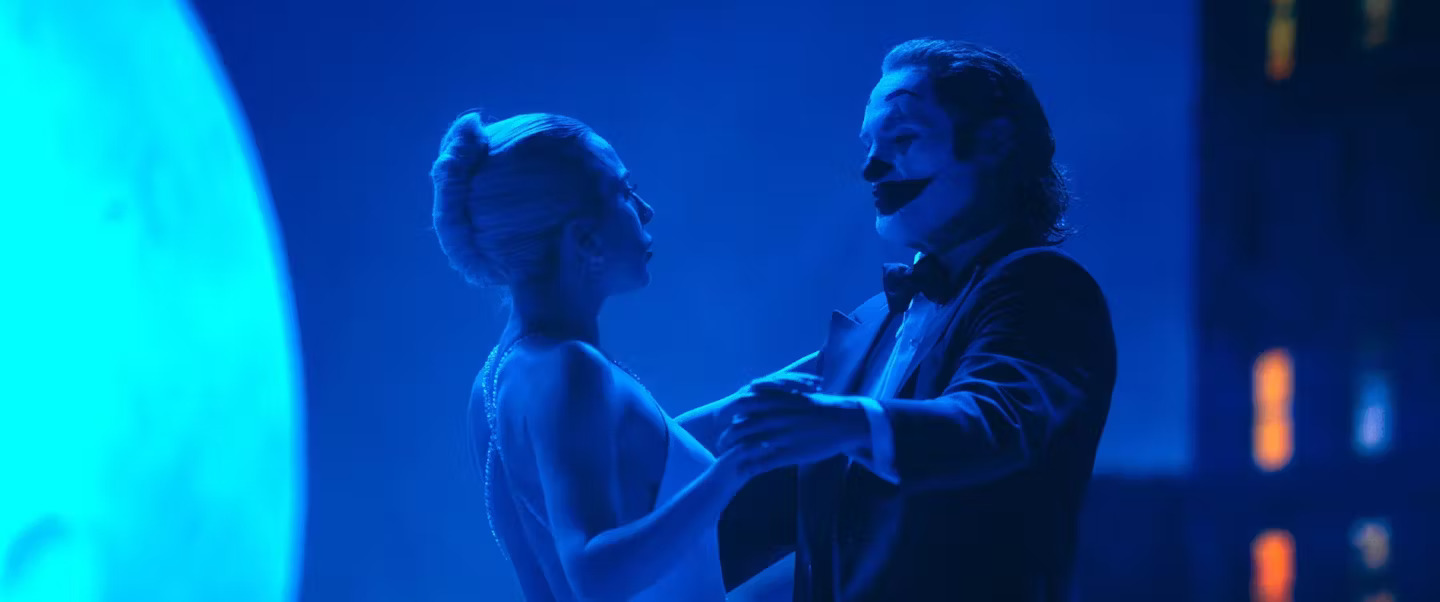
In the end, despite its many missteps, Joker: Folie à Deux can thank its chilling performances, cinematography, score and occasional moments of storytelling brilliance for saving it from not being outright bad. The narrative itself offers little in the way of substance, dancing (literally) around a few great ideas with a slow, uneventful pace and riddled with perplexing character choices. Coupled with musical numbers that suck any and all tension out of the film, Todd Phillips has forever tarnished the legacy of his once-phenomenal rendition of Batman’s most iconic villain. My advice; wait and watch the film at home, that way if you fall asleep you haven’t just wasted $20+ on the most disappointing sequels you’ll ever see.
5.4/10

 Everything Movie Reviews