

After making a Norse mythology epic of enormous scale, writer/director Robert Eggers has stripped things back for an eerie, spine-chilling adaptation of a silent classic – Nosferatu. This gothic horror tale follows a young woman being haunted by a menacing vampire who is infatuated with her, leaving a trail of unspeakable horror in his quest to get the girl.
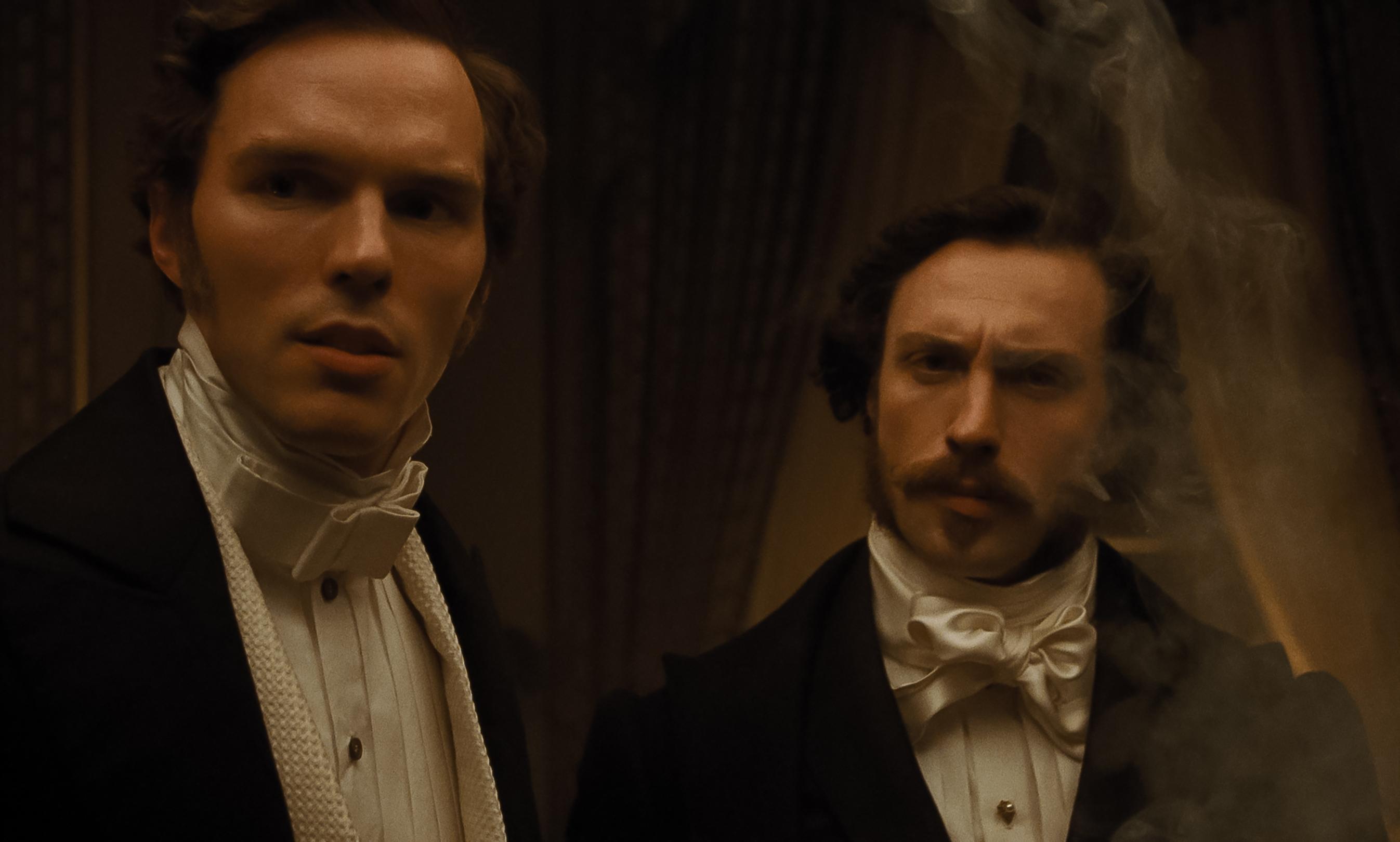
When it was announced that Robert Eggers would be making an adaptation of Nosferatu, everything just made sense. Eggers has a very unique visual and narrative style, and the idea of applying that to this gothic horror tale couldn’t have been more fitting. After seeing the film, this is exactly what I imagined an Eggers-directed Nosferatu film to look like. His signature is all over every single frame, his vision is clear and precisely executed, and it’s resulted in some truly beautiful yet unnerving cinematography. Eggers’ visual style is such a part of his identity as a filmmaker that it only makes sense that he’d continue to bring Jarin Blaschke on board as his regular cinematographer. This film’s aesthetic is so befitting to the character and the tone of the story that it’s almost a character in and of itself. Every single shot, without exception, is masterfully framed and composed to enhance the looming sense of dread. From the use of close-ups to capture visceral character reactions to the use of slow pans to capture a space in a way that invokes terror and suspense, the camera work is a true masterstroke.
One thing I love about the gothic horror genre is how there’s an air of romance and beauty to scenery that is otherwise deeply unsettling. The cinematography here strikes that perfect balance – it’s dark and terrifying yet oddly alluring, playing into the distinct romantic themes of the story. There’s also a gorgeous use of shadow to ramp up the atmospheric chills and conceal Count Orlok (Bill Skarsgård) behind a mystical veil of darkness. It’s dark enough to set the tone yet not so dark that you can’t make out what’s happening. Additionally, the colour palette is so muted that it gives the impression of watching a black and white film – a neat homage to the 1922 film’s look. It contributes to the overall tone, giving off the feeling that this world is cursed and devoid of life, that which it is as Orlok’s influence becomes greater. Speaking of shadow – some of the most effective instances of terror, where you most feel Orlok’s presence, are when you don’t see him at all. Having him out of frame and just seeing the shadow of his bony fingers or mangled body gliding across the frame is enough to deliver lingering chills.

When it comes to understanding what makes effective horror, Eggers has proven himself one of the greats in the genre ever since his directorial debut The Witch (2019) stunned audiences. Much of the horror in here is visual and atmospheric, with disturbing imagery across the entire film that’s effective in instilling a strong sense of fear. Nosferatu may not be the most outright scary film I’ve seen, but there’s something about the terror it invokes and the haunting presence of Count Orlok that had me in a constant state of suspense, tension and fear. Speaking of the presence of Count Orlok, his voice alone is enough to invoke nightmares. Whether it’s strictly Bill Skarsgård’s voice or there’s effects placed over it I don’t know, but what I do know is that whenever his deep voice reverberated through the theatre, you knew nothing good was about to happen. With a runtime of just over 2 hours, I’m amazed by Eggers’ ability to hold me in that unsettled state of paralysis for the entire film – a true sign of a quality horror director.
It’s not just the visuals that contribute to the horror – the sound design is absolutely visceral, enhancing the scares and tension with everything from blood-squelching bites to the incessant hissing of rats. Coupled with a stringy orchestral score that ramps up the volume and tempo with the film’s most terrifying moments, this is a wonderful display of horror on all fronts. I want to call out one sequence in particular for its use of horror, and despite the climax being incredible, it’s not that. It’s the entire sequence in which Thomas (Nicholas Hoult) visits Count Orlok in his castle. This is undoubtedly the best and most terrifying sequence in the film – it’s packed with frantic camerawork, fantastic scares and two exceptional performances.

That presents the perfect opportunity to transition into highlighting the acting ensemble, all of whom are mesmerising. Eggers has bought together a wonderful cast of talented actors who each contribute to the film in a way unique to their respective characters. First of all, this is my first time being exposed to Lily-Rose Depp and she has already proven herself to be a remarkable talent. Her performance as Ellen is heartbreaking, terrifying and seductive all at the same time. The narrative calls on her to go to some deep, dark places, and Depp sells every single frantic moment of terror and desperation. Alongside her is Nicholas Hoult with an incredible performance as Thomas. He’s also called upon to sell some truly harrowing experiences, and he does so without missing a beat. His chemistry opposite Depp is strong, and it works in getting you to care about their relationship. Willem Dafoe reunites with Eggers to play the wild and zany Professor Albin, injecting a burst of chaotic energy from the moment he appears. He’s utterly perfect for the role and fits the character to a T. He’s on a whole other level of eccentric compared to everyone else, but it works for what his role in the story is.
Then there’s Aaron Taylor-Johnson who plays Friedrich. This is the character that grew on me the most over the course of the film – not due to Taylor-Johnson’s performance, more due to the character’s personality. At first he feels out of place and unbearable, but over time you see what he represents in the story and his presence works in contrast to Hoult’s Thomas. Taylor-Johnson’s performance though is brilliant – he’s an actor with a tonne of potential who doesn’t always get the right roles, but this is certainly one of his best performances. Lastly, Bill Skarsgård is a sight to behold. He’s entirely unrecognisable in look and sound as Count Orlok, but he brings the character to life in a way that’s utterly repulsive and grotesque, yet strangely human. His ability to transform into his characters has always impressed me, and that’s no different here.
I should probably talk about the narrative itself and the very particular pacing that Eggers has used to tell this story. Eggers’ films have always relied on visual storytelling over spoon-feeding plot beats through lengthy exposition and dialogue. He lets his cinematography, performances and imagery do the talking, and it’s a distinct element of his that I love. That being said if you’re not used to his style of filmmaking, this ‘vampire movie’ may come across as a bit of grind. The story is simple and easy to understand, but does require you to pay attention to nuance, especially through the second act where there is a lot going on. Eggers’ attention to detail in crafting this story is the sign of a genius at work – the focus on character development and understanding the meaning behind their actions really helps flesh out the narrative. It’s also always progressing towards its end goal while incrementally upping the pace, getting more tense and gripping as time goes on.
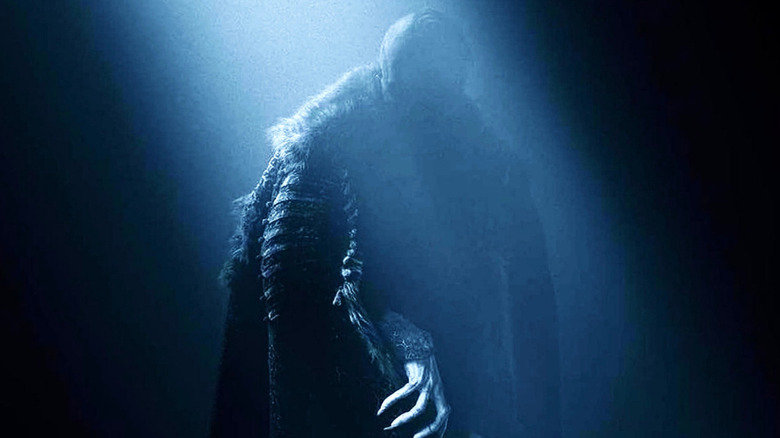
In the end, Nosferatu delivered on exactly what I wanted from a Robert Eggers gothic horror experiment, and this may be his best film. The cinematography is undeniably stunning – there’s awe and beauty in every shot, resulting in a film that’s as haunting as it is beautiful. The sound design and score work in tandem with the visuals to create a chilling atmosphere that’s gripping from open to close. The narrative is deep and compelling, going largely in the direction you expect, but with nuances in the character arcs that are unnerving and fulfilling. If you go into the film knowing you’re getting a Nosferatu retelling through a very unconventional artistic lens, then this film might just blow you away.
9/10

 Everything Movie Reviews
1 Comment