

I’m going to go ahead and say it; if you had me choose between Avatar 4 and 5 being made or a year’s worth of other movies… I’m sorry but I’m booking a first class ticket to Pandora. Avatar: Fire and Ash proves that anything James Cameron touches turns to gold, dishing out another near-flawless masterpiece that delves deeper into the world, fleshes out its characters and exhibits jaw-dropping technological wonders.
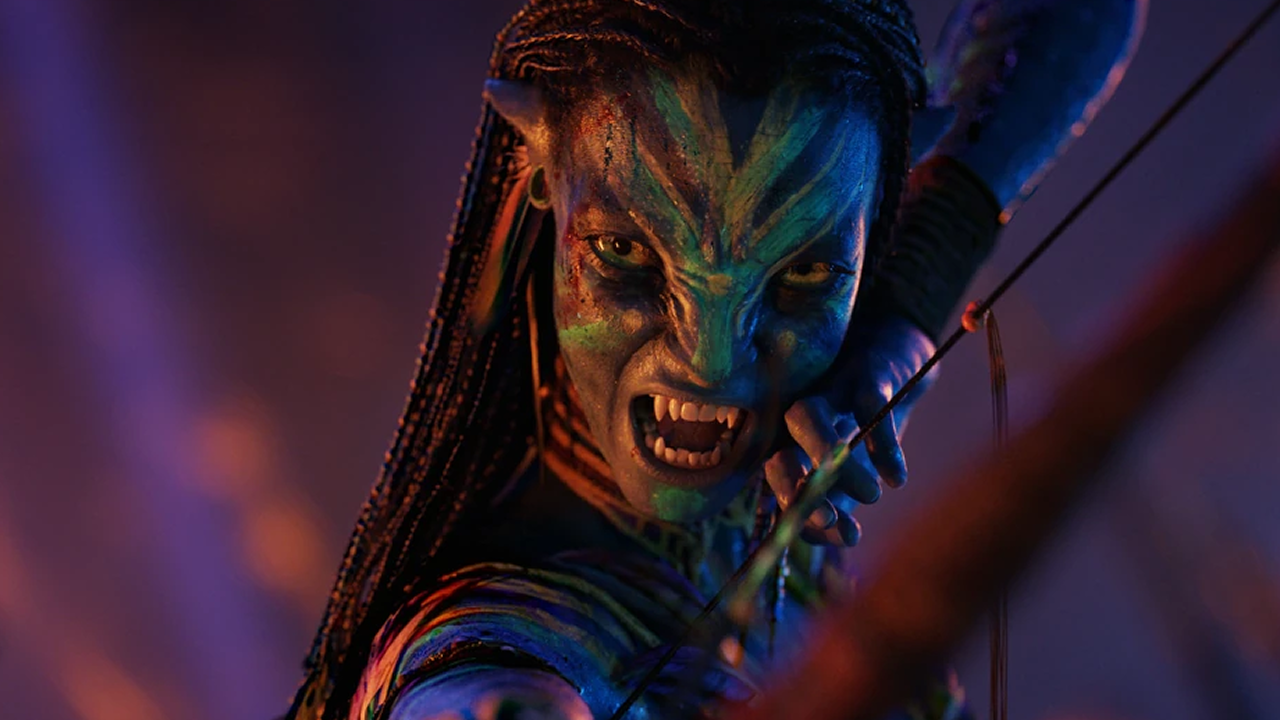
James Cameron has said that his original plan for Avatar 2 grew to be so enormous he had to split it into The Way of Water and Fire and Ash. It’s clear as day when you watch this film that this is very much a sister film and direct continuation of TWOW, touching on the same themes and continuing many of the same character arcs while greatly expanding the reach, scale and depth of the story. There are occasions where it’s maybe too familiar, both visually and in terms of the narrative, but those moments didn’t weigh on me as someone so enveloped in the world and character arcs. Sitting at a little over 3 hours and 15 minutes, it may be the longest of the franchise so far, but not a second of that length is felt. I was astounded by the film’s ability to keep me locked into the world and the narrative to the point where I couldn’t tell the difference between one hour or three. This world is so deep and the characters so rich that I was entirely drawn into the film; so much so that I had no idea where it would end or when it was coming up to its climax. There are multiple large-scale action sequences that could have easily been the climax, but the film just keeps on going. Its ability to remain engaging for such a long period of time is incredible; a testament to the potential longevity of this franchise.
When it comes to the story, not only does it progress with the elements introduced in TWOW; it really doubles down on them for more epic scenes and deeply emotional moments. While the focus is still on Jake Sully (Sam Worthington), his kids are even more in the spotlight than they were when introduced in the last film. One of the youngsters even takes over from Jake as the film’s narrator, adding to the growth they experience over the course of the narrative. What’s beautiful about this family-centric story is that every single one of the children has a fully formed arc that unfolds over the course of the film. The focus is quite well balanced amongst the kids, giving you time to become attached to each one and invested in the journey they’re on. As the film jumped between each of their subplots, there was never a second that I wished I was focusing on something else. Each arc is poignant, thrilling and action-packed in its own way, bringing something unique to the story that no other arc brings.
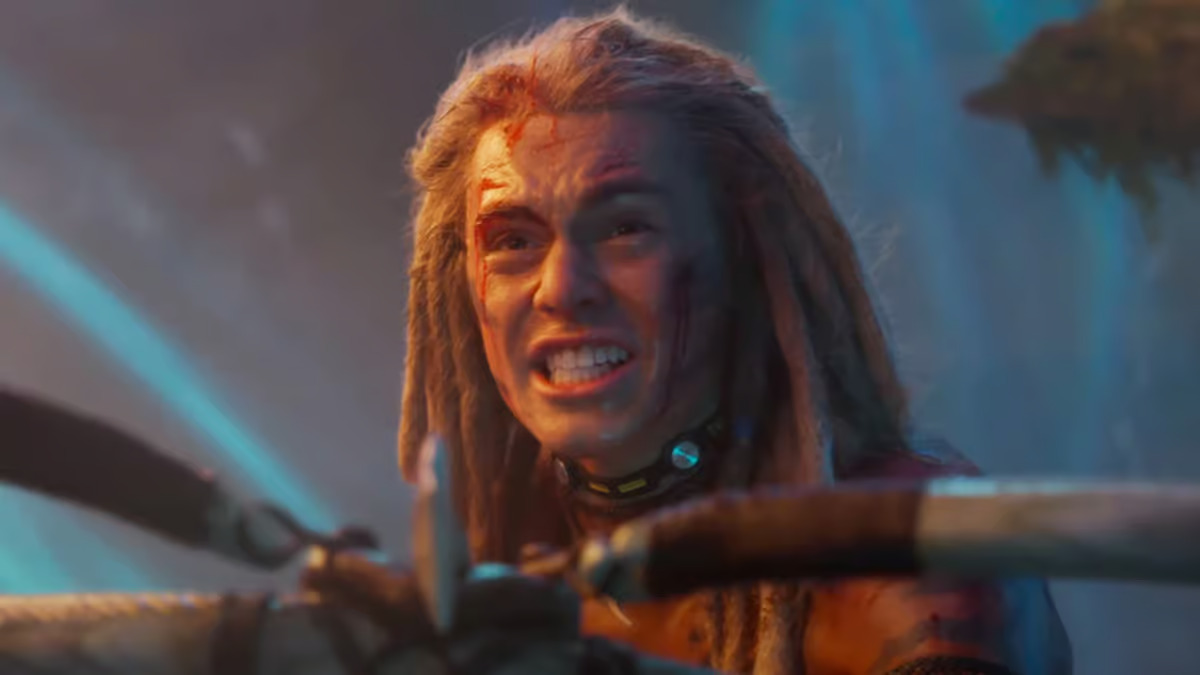
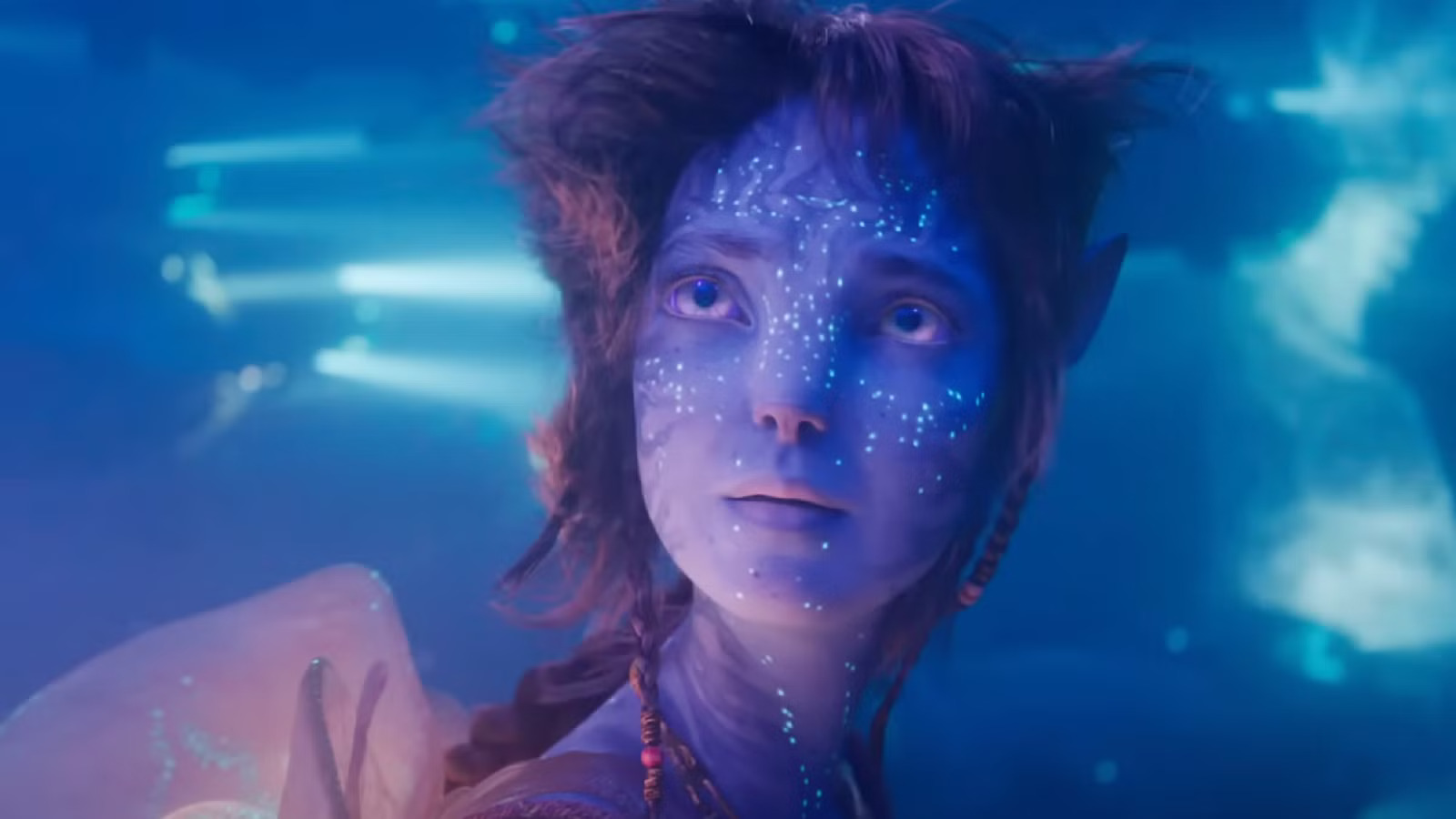
In an interesting detail, it’s Spider (Jack Champion) and Kiri (Sigourney Weaver) who have the strongest and most involved arcs of the film. It feels like their respective journeys have the most crossover with the characters around them, impacting more than just their personal journeys in ways I didn’t see coming. The young Tuk (Trinity Jo-Li Bliss) has a slightly expanded role despite being the youngest of the crew. She’s less of the baby being carted around and protected by her older siblings; there’s early signs of autonomy and independence that allow her to shine as an important piece of the Sully family puzzle.
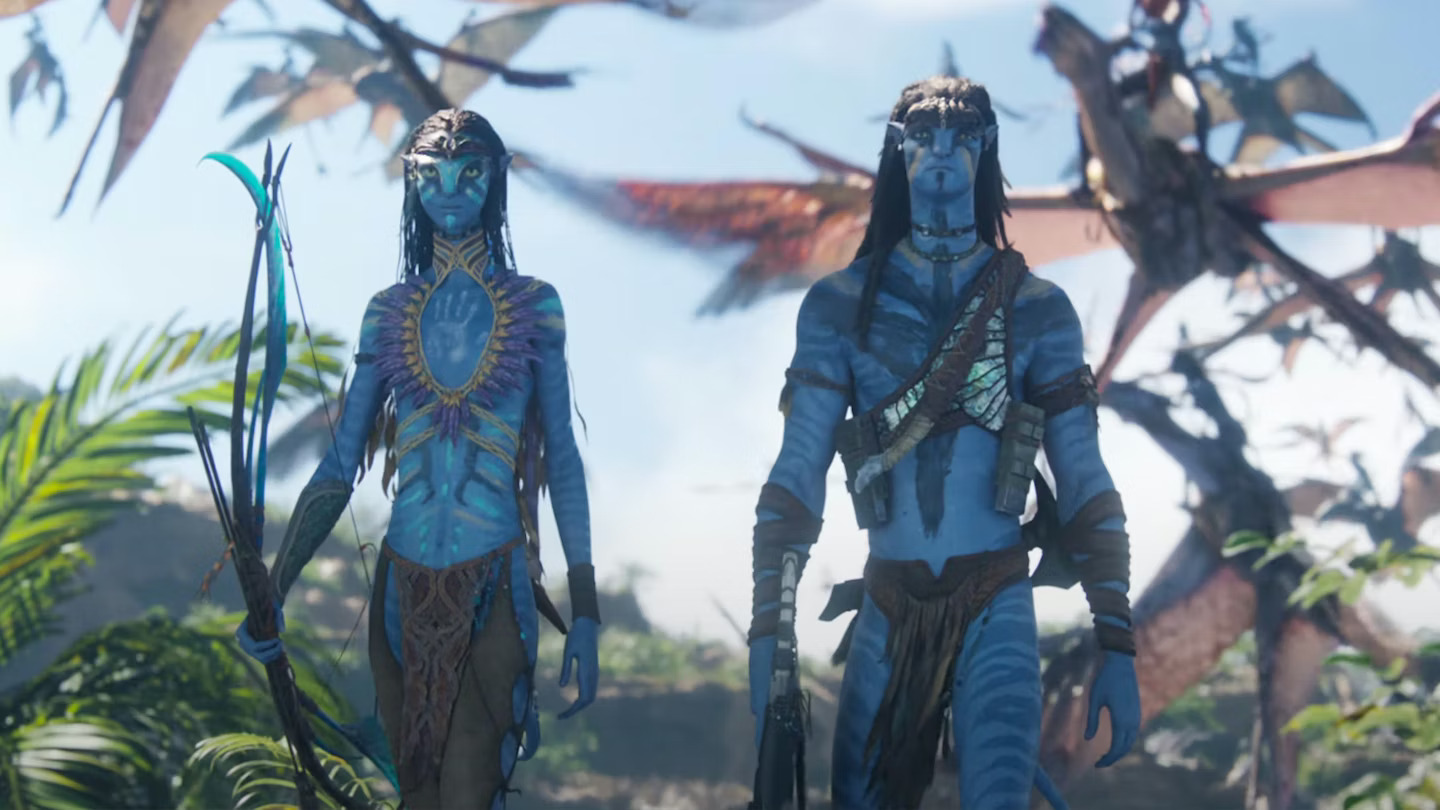
The Na’vi and human characters are certainly important, but I’d say one character more important to James Cameron’s vision for the film is the environment… or Eywa, if you will. The environmental elements of Pandora, from the flora to the ocean to the majestic Tulkun, all have a role in conveying the beauty of the planet and the poisonous nature of humanity. Forget a full-blown narrative; I could watch three hours of stunning landscapes, otherworldly fauna and underwater reefs if Cameron was directing. So much of the narrative’s emotional impact comes from how Cameron depicts the Na’vi’s connection to the environment and its importance in culture, life and love. Through this you feel a connection to the environment, which in turn evokes a strong emotional response when the humans start inevitably spreading their seeds of destruction.
As far as the villains are concerned, you obviously have your returning bad guys, with Quaritch (Stephen Lang) being the guy you love to hate, but it’s the new villainous clan that really makes an impact. First of all, Quaritch is such a charismatic character that I loved every second he was on screen. He’s grown to be so much more than just the macho colonel from the first film, and has an even more complex arc this time around. But despite Quaritch’s impact, it’s the alluring yet menacing presence of Varang (Oona Chaplin) that makes this ride a more thrilling and occasionally terrifying one. Varang is a force to be reckoned with, and the Ash Clan she leads prove to be a formidable opponent that tests the strength of our hero clans.
The cast is a stacked one, packing in even more key characters than both its predecessors and highlighting some truly incredible performances. Zoe Saldana put in a terrifying performance as Neytiri in TWOW, and has now backed that up with an even more emotionally-geared showing. Her range and ability to evoke the deepest feelings of grief all the way to the most guttural of rages is honestly remarkable to watch. Sam Worthington is about as strong as he has been across every film in this franchise, but its his chemistry with those around him, specifically Saldana and Britain Dalton (Lo’ak) that is most valuable. Dalton had to step up even more in this film, with Lo’ak dealing with a lot of inner conflict following the death of his brother. He contributes greatly to the emotional weight of the story and is central to some of the most moving moments in the film. Oona Chaplin is a stunning addition who thrives in her role as an antagonist, while Sigourney Weaver is a remarkable talent who never misses a beat, even when playing the role of a child.
Say what you will about the narrative within the Avatar films, but it’s impossible to deny the jaw-dropping scenery and awe-inspiring visual effects that line every single second of this masterpiece. Just when you think James Cameron, DoP Russell Carpenter and the army of visual effects artists have peaked with their abilities, they find a way to push the boundaries of CGI and visual effects tech. This film is a visual spectacle of the highest order, jam-packed with breathtaking on-land and underwater landscapes that regularly left me awestruck. It’s without a doubt the best-looking film in the franchise, so lock it in for the visual effects Oscar and consider every Oscar voter blind if it doesn’t get a cinematography nomination (like TWOW didn’t). The fact that every single on-screen element was rendered in a computer is unbelievable to me because of how real it looks. It sounds contradictory to describe an environment so alien as as “real” but Cameron has managed to pull it off. Also, don’t get me started on seeing this in IMAX 3D… it’s undoubtedly the most superior way to witness this piece of cinematic wonder.
The beauty and narrative is all wonderful, but there’s also a plethora of action and adventure sequences to go around. When I say this journey is action-packed, I’m not just talking a series of small-scale battles that build to a final climax. I mean there are more than a couple of all-out wars with immense size and scale worthy of being a climactic set-piece. These battles are riveting from start to finish and have plenty going on, with every character contributing and engaged in their own smaller-scale spats. They’re chaotic, they’re intense, they’re epic and they’re an absolute blast to watch, breaking up the slower moments with thrilling intensity. I will say that the final set-piece does have many similarities to that of TWOW, but I still feel there’s enough new elements in the narrative and visuals to not be a glaring issue.
In the end, Avatar: Fire and Ash is yet another certified cinematic masterpiece that strikes awe with every brushstroke. Everything it attempts across its narrative, visuals and action sequences it accomplishes to near-perfection, capping off a trilogy that’s even more impressive now than when it kicked off. While not as groundbreaking as its predecessor, it’s a deeply moving journey packed with incredible character arcs, astounding visuals and riveting performances. If you didn’t love TWOW and are hoping this does something different, you’ll be disappointed. This is an Avatar film through and through with a very familiar identity and prominent themes; one which will reward any fan of the franchise with more of what they love.
10/10

 Everything Movie Reviews
1 Comment